
Reading Indulgently
YA Romance and Headcanons

Before we get into The Corner, a quick announcement: I have a new story out in the inaugural issue of Lunae Literature and Review! You can read my short story, “Nothing Belongs To A Dead Woman” on page 30.
As we dip into the holiday season, I feel a call to slow down. To read for the sake of reading, to enjoy for the sake of enjoying. I think of quiet Christmas afternoons lost in a new book, and I think of my younger self, indulging in her own ideas about what those books really meant.
Growing up in the internet age, I was no stranger to thinking of books through the lens of fandom. I “shipped” pairings and “headcanoned” characters to have sexualities not stated on the page.
I’m not supposed to think about literature this way anymore, as a college-educated woman with a degree in English Language and Literature, or at the very least, I’m supposed to keep that thinking wrapped-up in thinking and not let it out on the page. “Ships” and “headcanons” aren’t academic ideas.
I want to push back on that. Just for today, I want to read a little more indulgently. I want to tap into the girl I was when I read The Sisters Grimm, The Hunger Games, and The Goose Girl.1 And I want to encourage you all to do the same.
A book is yours to make what you will of it. Pluck out the pieces that feel important to you and swallow them like sweet flecks of candy.
Call it a holiday indulgence, and promise to read “better” in the new year (and then fail on January 2nd.)
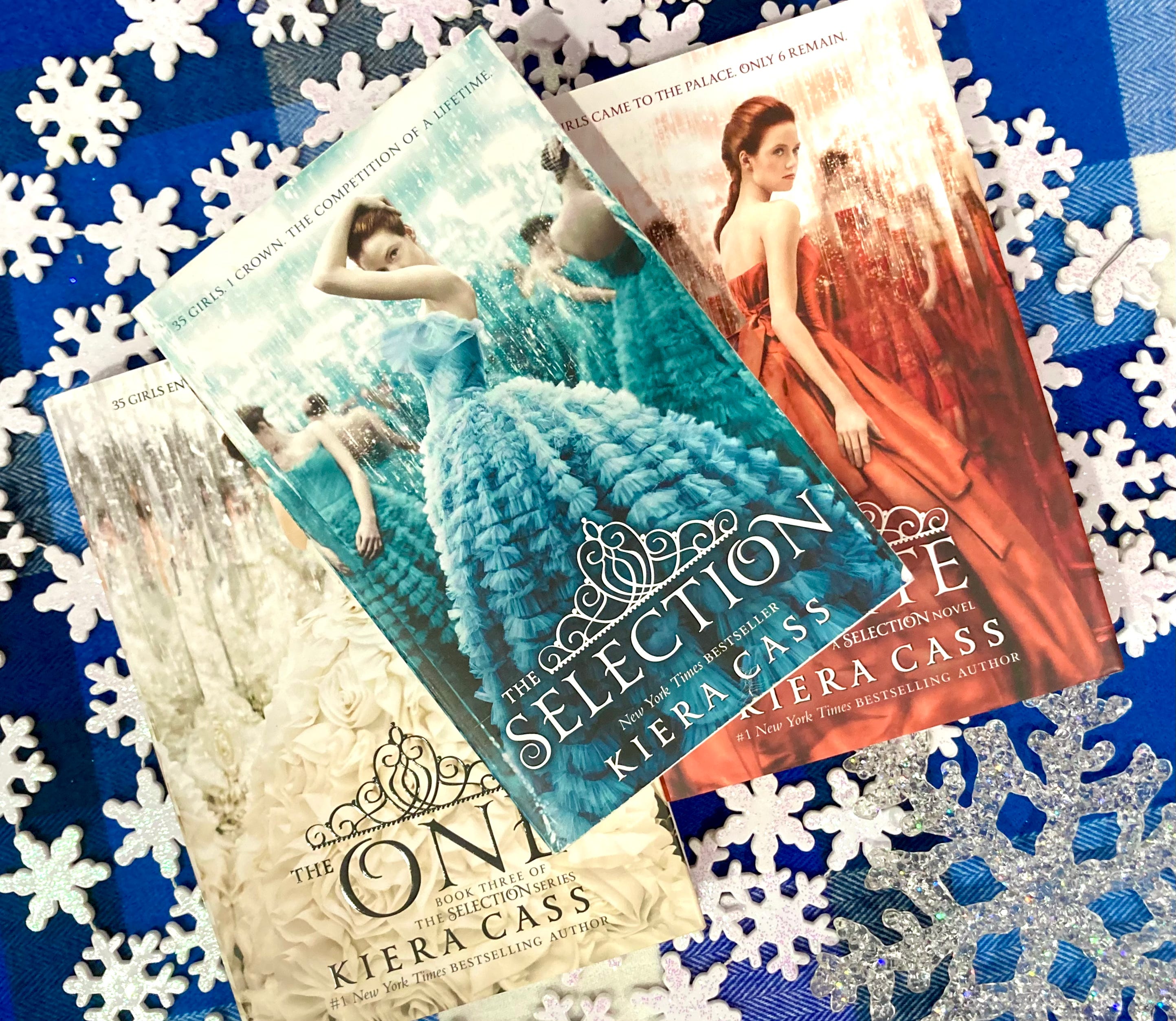
Joking aside, in the spirit of indulgence, I’m going to talk about a YA romance series that, by some strange alchemy I still don’t fully understand, captured my heart in middle and high school.
The Selection by Kiera Cass is a strange cross between The Hunger Games and The Bachelor. In a dystopian future, a royal family now rules “Illéa” (formerly the United States) and people are divided into numbered castes, ranging from Ones to Eights. The royal line has a peculiar tradition for deciding who the crown prince will marry; he hosts a “Selection,” where thirty-five eligible young women compete for his hand.2
America Singer is a Five, and lives a lower-class, but not entirely destitute life. One thing leads to another, and despite having no interest in it at the start of the series, she ends up participating in the Selection, befriending and then romancing the prince, and, of course, winning the Selection.
I’m not going to talk about the first three-book series, however. Instead, I’m interested in the sequel duology, about America’s daughter who, you guessed it, hosts a reverse selection, The Bachelorette style.
Reading the first book in the duology, The Heir, I was interested in the difference between Eadlyn, the new princess, and her mother, America, as narrators. It seemed to me that Eadlyn was more interested in genuinely connecting with the men she might marry, and physical attraction didn’t come into play quite as much.
In The Selection, America tried constantly to pretend that she wasn’t attracted to the prince, but the tension was palpable. The physical attraction between them was clear as day.
Eadlyn, meanwhile, spends a lot of time just talking to the men, with the exception of Kile, who she’s known since childhood. The two of them spend quite a bit of time kissing, and yet, it seemed to me that these moments were more about comfort than attraction. At least, that was my reading of it, through ace-colored glasses.
So, by the end of book one, I was already thinking of Eadlyn as possibly on the ace spectrum, but I figured the second book would disprove this idea. Surely she and her one-true-love would experience heated passion, whether consummated in action or not.
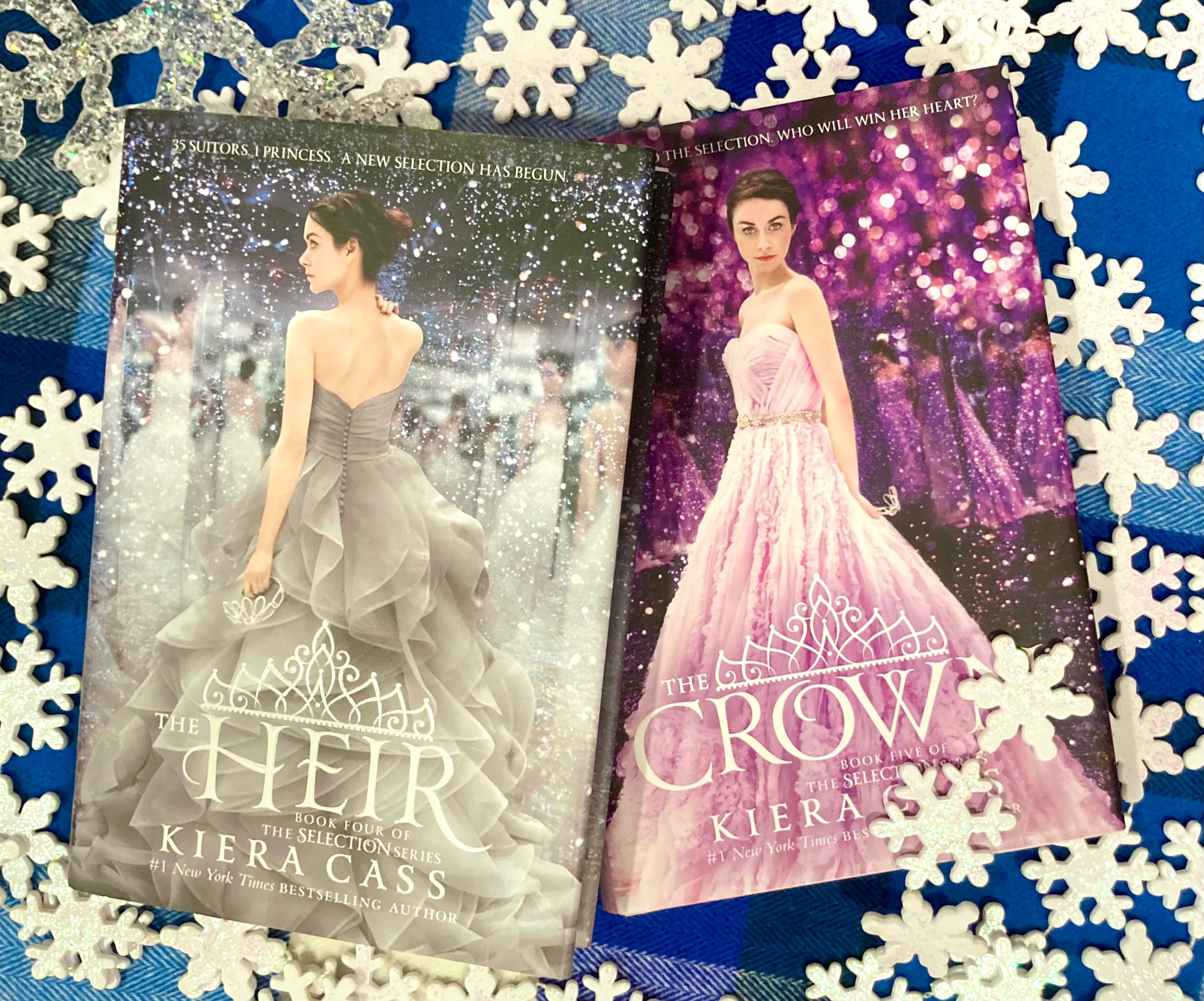
As soon as I saw the cover of the second book, I felt sure Eadlyn was ace.
Sort of. Let me explain.
See, for the original series, the colors of the covers held meaning. A pretty shallow meaning, but meaning nonetheless. The red, white, and blue covers clearly represent the main character, America, who was named as such by her father because he supports returning to the old, democratic ideal of the long-forgotten United States.3 There’s a whole element to the plot of these books about a rebellion, but we don’t have time to get into that mess. The regency remains intact for the sequel series, and that’s all you need to know.
The point is, the covers of The Selection, The Elite, and The One correlate to the colors of a flag relevant to America’s identity. The cover of The Heir was gray, and now the cover of The Crown is purple. Could it be pointing to the ace flag? The gray-ace flag? The demi flag?
To add fuel to the fire, The Crown includes the first real queer rep in the series, wherein two of the men in Eadlyn’s selection reveal they’ve fallen in love with each other and withdraw from the competition. And in the end, Eadlyn chooses none of the selected men as her prince, but the translator for one of the contestants.
Erik, translator for Henri from “Sweedenway,” seemed to click with Eadlyn from the start, and he was the one I rooted for as a young teen reading these books. Though the two of them hardly ever touch, Eadlyn decides he’s right for her simply because she’s attracted to his personality and feels supported by him.
Seems pretty aspec to me.
Of course, I have no idea if this “representation” is intentional—nor do I really care. It was fun to indulge in reading this character as aspec, in the same way that is was fun to indulge in reading these books at all.
My favorite part of this duology was a long scene where Eadlyn plays baseball with the selected men. It’s silly, (it’s a blatant rip-off of Twilight), and it’s fun. The characters are just enjoying themselves, despite the larger political implications of the plot, and the book seems to be saying: it’s alright to just indulge sometimes, especially when the consequences are only fictional.
My favorite YA/middle grade series, from ages 10-15.
The sociopolitical implications of this book are… interesting. The future it imagines is messed up, and the ways the narrative tries to improve it are strange and improbable. To enjoy this series, you do kind of have to just ignore logic and let it go where it goes. Much easier for me to do as a teen than if I tried to re-read it now.
Yeah, there’s some glorification of “old USA” in here that isn’t great. The books are mildly self-aware about this, if I remember correctly? Anyways, I never said they’re good books, just that I liked them when I was younger… if you catch my meaning.
I loved the Sisters Grimm in Middle School!